Another meal, another medical mystery…
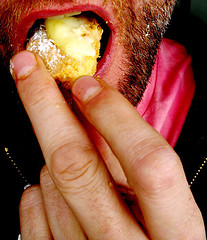 As I savoured the dying moments of the summer bank holiday, I was relishing the last few mouthfuls of a marvellous and hearty meaty meal. Then as the sun started to set, that dreaded line finally came: “Hey, I’ve got a question for your blog!”
Now something of a running joke, the question has become an excuse for friends to ask me all manner of interesting, amusing and distasteful questions. This one was better than most – “Why do we get meat sweats?”
Having indulged in liberal servings of steak, chicken and tuna - all cooked on a Raclette (a quirky Swiss Fondue-BBQ hybrid plate invention) - we knew what would likely come next: Hours spent lying in bed overheating and sweating profusely – this seems to be the punishment for such protein gluttony. But why? What causes the dreaded ‘meat sweat’?
What is a Meat Sweat?
Vegetarians will probably never have to undergo the unpleasant duvet-drenching ‘meat sweat’ experience. The Urban Dictionary sums up this bizarre ordeal pretty neatly:
“To consume an obscene amount of meat resulting in perfuse sweating.” Urban Dictionary
What causes Meat Sweats? Are they Real?
 Some say meat sweats are brought on by nitrates and salts in cured meat. Some even deny they exist. Of course they do - just ask any competitive eater.
Meat sweat deniers argue that the burger-related perspiration problem has never been scientifically proven. They are correct – an article on ‘Meat Sweats’ won’t ever get published in a medical journal. However, something about ‘Protein-induced thermogenesis’ will… (clearly)
The Science of Meat Sweats
If I had a TV show, it wouldn’t feature anything like Brian Cox’s starry-eyed ‘Wonders of the Universe’ spiel – Oh no, instead I’d get all loquacious about the marvels of the human body. Because that skin-covered biological machine you’re sitting in is a mighty impressive bit of kit. But like any machine, the human body isn’t perfect. Take digestion: when you eat food – some of it gets wasted. When you troughed through that Big Mac at lunchtime, not all of those 500 calories actually made it into your body. A significant portion of its calorific content was lost (excluding what you spill down your top, of course).
Have you ever noticed how you feel warmer after a meal? In the process of absorbing energy and nutrients from food, your body ends up using some of that energy – as heat. Put another way: there is an energy cost to breaking down food. This cost in energy terms means you get warmer (just like doing exercise). So, about 60 calories of that Big Mac you just ate has been lost as heat in what’s called the ‘thermic effect’.
The Thermogenic effect of Protein
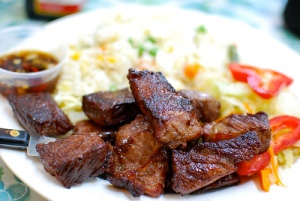
Peckish, anyone?
Starchy foods (like bread) give up about 10% of their calories in heat after meal time. The champions of the thermogenic league table are protein-based foods (meats, etc) - giving up at least 25% of their energy content as heat - sometimes more. This means that from every four bites of your pricey venison steak, one bite will be radiated out of you as pure heat!
Some say that the body-heating thermogenic effects of high-protein foods are why fad diets such as the Atkins have been so successful. The scientific community have yet to conclude whether this is actually the case.
I know that one thing’s for sure: if heating prices soar this winter, one way to offset the bills is with a mixed grill before bed…
.
Thanks for reading - comments and feedback are warmly welcomed!
RELATED POST: The Mystery of the Itchy Nose!

DISCLAIMER: All of the writing in ‘Doctor Stu’s Science Blog’ are intended for educational and entertainment purposes only. Please do not base your healthcare decisions on the information contained in this blog: Always see your GP first!

Download your free copy here!
Selected References:
Halton TL, & Hu FB (2004). The effects of high protein diets on thermogenesis, satiety and weight loss: a critical review. Journal of the American College of Nutrition, 23 (5), 373-85 PMID: 15466943
Westerterp-Plantenga, M., Nieuwenhuizen, A., Tomé, D., Soenen, S., & Westerterp, K. (2009). Dietary Protein, Weight Loss, and Weight Maintenance Annual Review of Nutrition, 29 (1), 21-41 DOI: 10.1146/annurev-nutr-080508-141056











 Doctor Stu's Science Blog
Until I started weight lifting and consuming 2 large protein shakes each day, I thought that the “Meat Sweats” were just something funny that Joey on FRIENDS made up. Oh but it’s real. And you’re correct, it is based on the protein in the meat. The body has to work harder to break down protein, and this not only burns more calories than breaking down, say, a stick of celery, it also heats up the body while working harder. For someone who has just consumed a huge steak dinner, it would be an uncomfortable, inconvenient feeling (especially at a restaurant) but for someone who’s consuming more protein on purpose, it’s kind of a nice feeling to know that your body is working hard and burning calories while you sit at a desk (like I am now). Nice article!
Posted by FlabbyAbby | September 14, 2012, 9:20 pmThanks for your kind words - I’m pleased you found the post useful! I have written another post about the myth of ‘negative food diets’ (I.e. the idea that celery burns lots of calories). You might want to check it out. (search ‘celery’ in the search box above).
Good luck with the training!
Posted by Stuart Farrimond | September 15, 2012, 7:47 amSo what’s the mystery behind the chills I get when very full? I have heard the blood rushes to your stomach to break down the food so is not circulating as normal, thus not available to keep you as warm as it would otherwise?! Just curious if I’ve been mistaken all this time?
Posted by K Thomas | April 3, 2013, 11:57 pmThanks for the question - I’ll look into it!
Posted by Stuart Farrimond | April 7, 2013, 9:32 pmSorry to barge in on your comment but I am not a memeber of this ste so I couldn’t comment but oddly I can comment on a comment! LOL!
Anyway I did a search because of the progressive commercial! The oenwhere FLo’s family is sitting around the table and the man or dad says “I got the meat sweats” And I just wanted to know what tey are and if it was a real thing!
Great blog btw!
Thanks!!
Posted by miclinnt | July 2, 2015, 7:05 amThanks for your kind words. Strange commenting problem, never come across that one before. A glitch perhaps?
Posted by Stuart Farrimond | July 2, 2015, 11:06 amHi, I have a question regarding sweating while eating. Why is it that certain foods cause sweating when they AREN’T protein based? One classic example is the durian fruit. It is known among locals (in Southeast Asia) as a ‘heaty’ fruit. But it’s mainly carbs and fat! So can it be thermogenesis? What scientific basis is behind this claim? Thanks.
Posted by Joanne | February 8, 2013, 2:05 pmHi Joanne!
Great question. I co-run a free digital magazine called Guru Magazine, and we offer an ‘ask a guru’ question. I liked your question so I put it to the team of ‘gurus’. Here is your answer! http://wp.me/p1sHQd-2KZ
Hope that helps,
Stu 🙂
Posted by Stuart Farrimond | April 10, 2013, 9:45 amI learnt all about the meat sweats living in Buenos Aires… those steaks out there are something else! And with sausages as a starter too
Posted by Alex | September 10, 2013, 2:12 pmSounds fantastic!
Posted by Stuart Farrimond | September 10, 2013, 5:37 pmWhat is interesting is you never told WHY they are thermogenic or why the body goes into a thermogenic status. 2 reasons: 1) the body has to raise to a higher temperature to actually be able to start breaking down meat products because of their density of protein, how they are cooked etc. and 2) because meat products cause acidity to the body which also creates a higher temp in digestion….so in easier to understand words the body is trying to rot the meat so that it is digestible.
Posted by KCash | December 7, 2013, 1:46 amI eat ton of meat and never had the meat sweats.
Posted by tony | December 29, 2015, 2:43 amLast night we were having dinner with friends when a member of our table broke out into the “meat sweats”. I’d never heard that term before. As a type 2 diabetic, I know I get the sweats from eating too much (too much of anything, not just meat) in a single meal. My blood sugar sky-rockets. Normally the body will expel the sugar via urine. If I’m sweating, my body is in crisis. My sweats were what sent me to the doctor which led to my diagnosis. I’d strongly encourage anyone (including my friend) who starts sweating at the dining table to get their blood sugar checked. Especially if it starts happening more than once a week.
Posted by Carina Neumann | February 8, 2016, 3:05 amI’m a type 1 diabetic, genrally speaking, protien wont raise your blood sugar unless you eat a huge amount of it. Anything with a face, cheese, or eggs is generally carb free, though you might see a blood sugar elavation about 2 - 3 hours after eating a huge amount of protien, for instance a meal of 3 eggs and 3 slices of bacon, usually equals about 15 long term carbs rather than a huge blood sugar spike like you would get after coffee, sugar, or carb heavy foods like bread which tend to hit within the hour. Usually for Type 2’s you dont even need to worry about the protien intake =)
Posted by Micky Amos | May 21, 2016, 1:06 pmInteresting article. I’ve noticed everytime I have, red meat in the evening, I wake up, several times, in the middle of the night with severe night sweats. Putting two and two together decided it would be interesting to see if there was any research on this. Finding no conclusive evidence, it seems your blog makes the most sense. Enjoyed reading it.
Posted by Sally Tucker | February 24, 2018, 1:49 pm