 They just don’t write blogs like they used to. Back in the good old days there was none of this Twitter or Facebook piffle. Web pages were once simple and images didn’t instantly appear but – like a photo being developed – gradually formed out of a pixelated mess. In the 1990s, receiving an email was still a fun novelty. Ah, the how things were better back then. You kids don’t know you’re born.
Contrary to what you might think, it’s not senior citizens who are the experts in nostalgia. At the tender age of thirty, I’m as adept at reminiscing as anyone. I can fondly remember a bygone era where social engagements weren’t cancelled on the whim of a text-message. Foolish sentimentality? We rose-tinted nostalgics are perhaps the ones most capable of dealing with modern-day life. Today’s blog post is for everyone who thinks things were better when they were a kid…
Being in your 20s is the best time of your life
If you were to choose a favourite song or tune, the chances are you would pick something you listened to in your early 20s. Consistently seen as the nostalgia ‘hot spot’, our early adulthood is perhaps the default setting for our wishful longings.
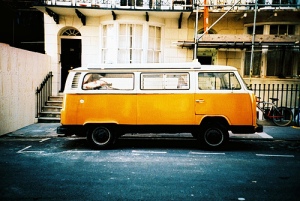 Yet there is something of a paradox here. Your life may have been extremely tough back then. For those who were in their ‘prime’ in the 1960s and 1970s (you baby-boomers), the era was one of great social change and turmoil. But our sentimentality ‘filters’ out the bad bits. Nostalgia is so powerful an emotion that we only-too-willingly open our wallets to buy that which helps us to relive those feelings – whether real or imagined.
Nostalgia is a warm, comforting emotion that all of us experience. Young or old, we all do it. Leading psychology theories say that gazing back down memory lane helps establish our identity in the present time.
Remarkably, we aren’t only nostalgic about what we have experienced. The pleasant emotions felt when thinking about the past are the same – even for times before we were born. Advertisers first unleashed the incredible selling power of nostalgia in the 1990s. Since then, retro and vintage products have become a staple must-have purchase. Like a drug, we will more than gladly pay for that comforting sentimental ‘hit’.
Don’t believe me? Just look at the number of 30-year-olds pining for a 1960s VW camper van. With a surf board on top. Flower power man…
Buying into the ‘Good old days’
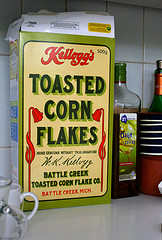 You don’t have to look far for the swathes of nostalgia-manipulating marketing. Countless products have been (re)introduced or (re)positioned to directly appeal to our nostalgic tendencies. Maxwell House introduced ‘1892 Slow-Roasted Coffee’ in original 19th Century-styled packaging with the slogan “1892 was a very good year for coffee”. As a coffee aficionado, I somehow doubt that.
Coca-Cola’s curved bottle is a replica of 1915 soda bottles and has been trademarked to them. Shopping plazas are constructed according to 19th Century Adirondack architectural styles (to “bring up images of holidays and vacations”). Kellogg’s frequently repackage their cereals in “period”-designs. Premium prices are charged for vintage-style radios, telephones and cars.
It matters little whether we have any personal memories of these idealised times – only whether this collective past can trigger a warm, secure feeling or not.
That said, having a penchant for such things is not a sign of being a weak person.
Nostalgia – an effective coping mechanism for young and old
It is not only the elderly who like to romanticise about the past – research suggests that young people do it almost as much. But what is it that makes some of us do it more than others?
Being male or female, happy or unhappy is not a good predictor for being a nostalgic person. Sociable, emotional and motivated people are more likely to relish some reminiscence. It is loneliness however that appears to be one key trigger for nostalgia. It could be reasonably argued that an increase in nostalgic-products is a symptom of an increasingly fragmented and isolated society.
Research in 2008 showed nostalgia to be a feature common to the most resilient people. Coping with adversity and life’s stresses seems to be effectively treated by a spot of wistfulness.
A few days ago, I felt a twinge of envy as I watched someone scoop up a fully boxed 1980s Zinclair ZX Spectrum computer at a flea market. It was a computer I played on as a child; games had 8 colours, terrible sounds and took ten minutes to load.
Perhaps my crazy whim no longer seems as foolish.
Thanks for reading - all opinions are my own. Feel free to leave your comments below…

REFERENCES:
Batcho KI (1998). Personal nostalgia, world view, memory, and emotionality. Perceptual and motor skills, 87 (2), 411-32 PMID: 9842580
Batcho KI (1995). Nostalgia: a psychological perspective. Perceptual and motor skills, 80 (1), 131-43 PMID: 7624184
Jeff Greenberg, Sander Leon Koole, Thomas A. Pyszczynski, 2004. Handbook of Experimental Existential Psychology. 1 Edition. The Guilford Press.
Juhl, Jacob. (2010) Fighting the future with the past: Nostalgia buffers existential threat. Journal of Research in Personality, 77(3), 1271-314. DOI: 10.1016/j.jrp.2010.02.006
Zhou X, Sedikides C, Wildschut T, & Gao DG (2008). Counteracting loneliness: on the restorative function of nostalgia. Psychological science, 19 (10), 1023-9 PMID: 19000213
William J. Havlena, Susan L. Holak (1991), “”THE GOOD OLD DAYS”: OBSERVATIONS ON NOSTALGIA AND ITS ROLE IN CONSUMER BEHAVIOR”, in Advances in Consumer Research Volume 18, eds. Rebecca H. Holman and Michael R. Solomon, Provo, UT : Association for Consumer Research, Pages: 323-329.











 Doctor Stu's Science Blog
I really enjoyed this Stuart because I was so curious about this bit of human stuff. It probably answers the question about why people of a certain age seem to strongly prefer listening to cover bands of the famous bands they enjoyed in their 20’s. ( much to the consternation of musicians who prefer to work more creatively)
Posted by Ruth Behan | July 23, 2012, 10:03 amThanks Ruth!
Posted by Stuart Farrimond | July 28, 2012, 1:53 pmThis concept is an interesting one. It is not surprising that the 20’s are generally the most likely time for nostalgia. In my psych class I read that in many ways, the human body is at its peak in early adulthood. For example, in the 20’s the human body is physically at its peak. I would expect most older people to look back at those early days with fond memories. Thanks for posting!
Posted by Bethany K | July 24, 2012, 2:40 amThanks for commenting!
Yes indeed, it’s all downhill after the twenties.. 🙂
(although I think long distance runners peak in their early thirties)
Posted by Stuart Farrimond | July 28, 2012, 1:55 pmA lot of Nostalgia comes from missing things of real benefit from that past to which we have no access now. Nostalgia for things from before one’s own chronological life often arises because our subjective worlds often encompass things that we have seen in old movies and stories that have been told to us - just as if we had been there. Objectively when we sit down and watch an old film or costume drama we simply willingly suspending our disbelief as a learned means of enjoying the show, but subjectively we become time travelers.
Posted by patricknelson750 | February 5, 2015, 2:38 amOh my goodness! Yes yes yes. I am 22 now and i feel nostalgic when i even mention ‘the wonder years’. Its a show i only discovered recently to even exist and yet i have become so obsessed with it, i even cried when i read a synopsis of the series. I don’t know why but the innocence and reminisence is so relatable to me. Perhpas its because i grew up in a close knit family too. I feel sad that life is so complicated these days and children hardly enjoy the things we used to. Thanks for the article.
Posted by The Wonder Years | March 23, 2015, 6:49 amAh yes. “The good old days .” Like that golden era that was the late eighties to early nineties. Violence , drugs, and more gang violence. Not to mention all that fun inflation and unemployment. Come to think of it, wasn’t there some sot of tech bubble burst at the beginning of this current millennium? I’m sensing a pattern here .
Posted by john Lord | July 13, 2015, 5:10 amWell for a Good single man like me that really wanted to get married to have a family which today it is very Difficult since years ago it Would’ve been much Easier for me since the women were so much nicer and much Easier to meet compared to now which many of my friends do certainly Agree with me as well since they hate being Single too.
Posted by Carl | July 23, 2016, 12:39 pmWell most of the women in the old days were the best of all compared to these pathetic ones that are out there nowadays. And what is very sad is that most of the women today have no respect for us men at all and a very bad personality to go along with it as well. Quite a change unfortunately which is why many of us good men are still single now.
Posted by And The Truth Is | February 22, 2017, 1:12 am